Awards Featured News
//
//
January 13, 2025
//
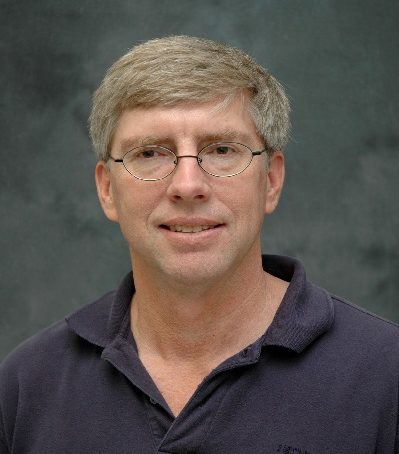
CITA Professor Norman Murray has been named a 2025 Fellow of the American Astronomical Society (AAS) for his “seminal contributions to our theories of chaos in the solar system, including planet formation and evolution; and for pioneering new methods for studying the physics of black hole accretion and the effects of stars and supermassive black holes on galaxy formation.”
The American…
Read more »
Featured News Publications
//
//
December 13, 2024
//
By Lyuba Encheva (with files from EHT press office)
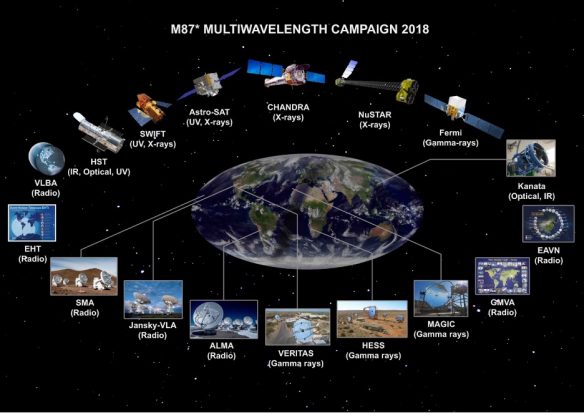
Canadian Institute for Theoretical Astrophysics researchers Bart Ripperda, Ue-Li Pen and Gibwa Musoke, who are part of the Event Horizon Telescope (EHT) collaboration, are among the authors of a paper outlining the results of a multi-wavelength observational campaign conducted in April 2018.
The authors report the first observation…
Read more »
Awards Featured News
//
//
November 6, 2024
//
By Lyuba Encheva, Canadian Institute for Theoretical Astrophysics
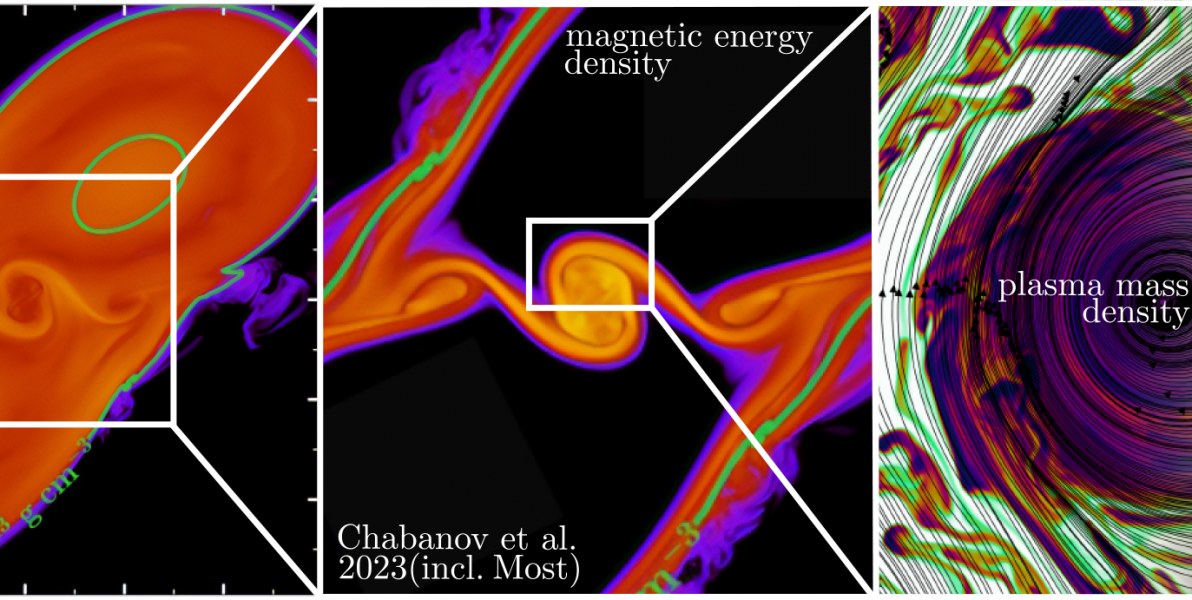
CITA and Princeton Postdoctoral Fellow James Beattie and collaborators were awarded close to a 100-million-core-hours on the German supercomputer at the Leibniz Supercomputing Center, SuperMUC-NG. Beattie will utilize the immense computing power of SuperMUC-NG for the investigation of magnetic field generation in merging binary…
Read more »
Featured News
//
//
September 30, 2024
//
By Lyuba Encheva, Canadian Institute for Theoretical Astrophysics
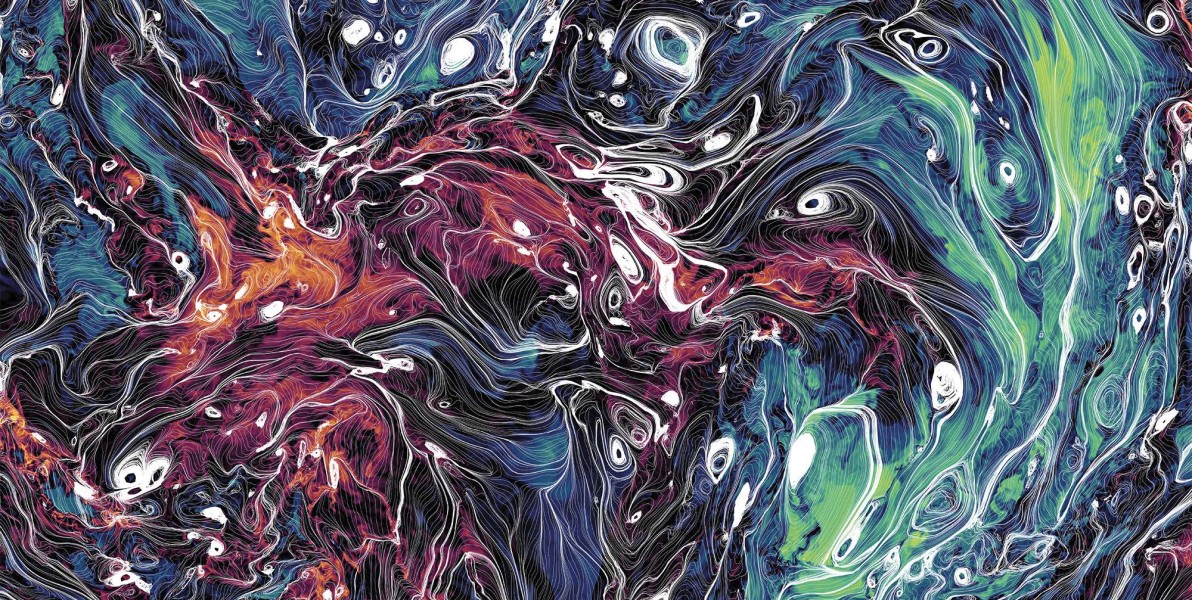
“Van Gogh’s depiction of the starry night closely resembles the turbulence found in between the stars in our Galaxy”, explains CITA/ Princeton Postdoctoral Fellow James Beattie for CNN.
The impressionistic painting of Van Gogh is not just an artist’s rendition of a summer night’s sky. As it turns out, the scrutiny of an…
Read more »
News Special Events
//
//
September 30, 2024
//
The Jamboree is an annual gathering of the CITA community from all over Canada, which provides an opportunity for new members to share their research with everyone. This year’s Jamboree will include a series of short informal presentations, social events, contributed talks and discussion.
Schedule of Events:
Virtual presenters are denoted with an asterisk…
Read more »
Featured Special Events
//
//
August 28, 2024
//
What?
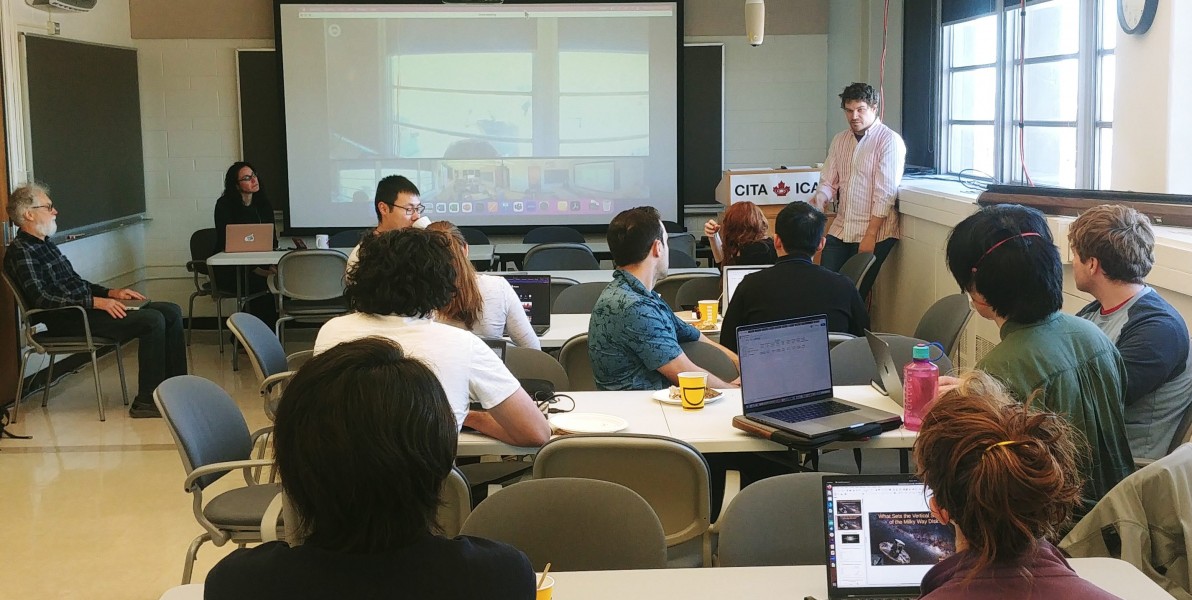
The CITA mentorship committee is once again hosting a Job App Hackathon! The CITA Job App Hackathon is an opportunity to prepare job application materials and get feedback from peers and mentors, including several CITA, Dunlap, and Physics faculty. In addition to co-writing sessions in the morning and afternoon, attendees will be able to sign-up for short one-on-one meetings wit…
Read more »
Featured News
//
//
August 16, 2024
//

CITA extends a warm welcome to our incoming Fellows and National Fellows. In September, we will be joined by four Fellows at our flagship at the University of Toronto and two national fellows at McGill University and the University of Victoria. We are committed to providing post-doctoral training for early career researchers in the field of Theoretical Astrophysics and are excited about t…
Read more »
Awards Featured News
//
//
July 22, 2024
//

By Lyuba Encheva, Canadian Institute for Theoretical Astrophysics
In June the International Astronomical Union [IAU] announced the 2024 winners of three IAU prizes – the IAU Astronomy Outreach Prize, the IAU Astronomy Development Prize, and the IAU Astronomy Education Prize. The three awards recognize individuals and organizations who have made outstanding contributions to the fields of…
Read more »
News Publications Recent Papers
//
//
April 5, 2024
//
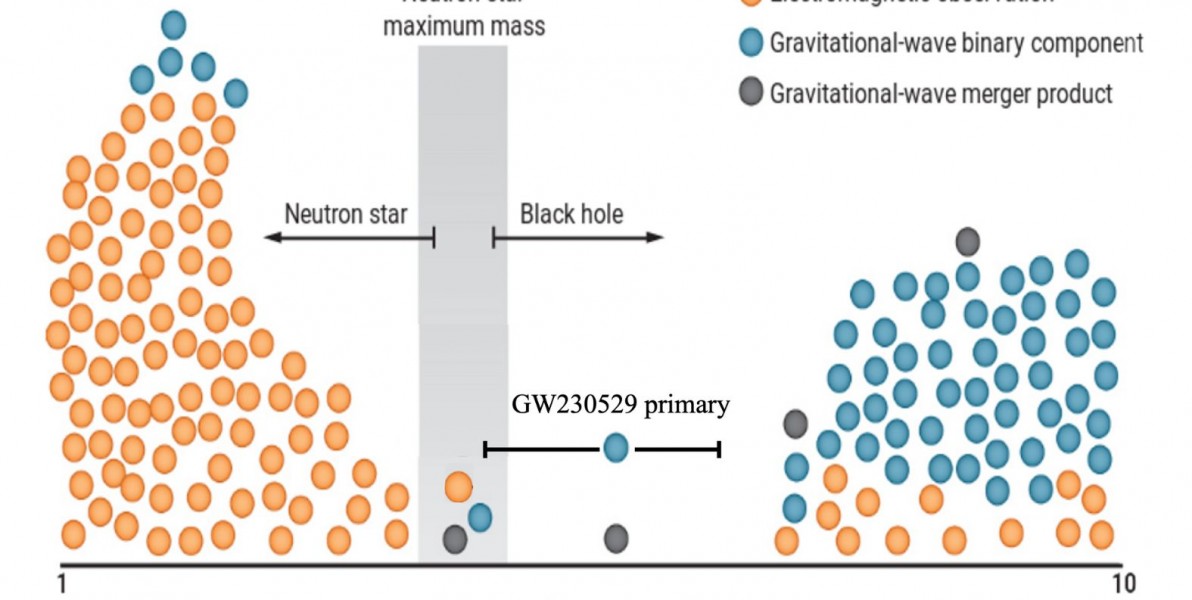
Today the LIGO-Virgo-KAGRA (LVK) Collaboration released information on one of the events detected during its current fourth observing run – a gravitational-wave signal from the collision of what is most likely a neutron star with a compact object that is 2.5 to 4.5 times the mass of our Sun. What makes this signal, called GW230529, intriguing is the mass of the heavier object. It falls within a…
Read more »
Featured News Publications Recent Papers
//
//
March 6, 2024
//
By Milan P. Ilnyckyj, Canadian Institute for Theoretical Astrophysics
Research published in Nature by CITA National Fellow Simon Blouin grants new understanding of delayed white dwarfs.
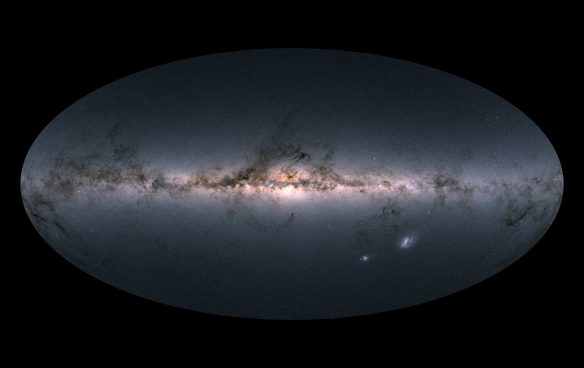
Your astronomy textbook might describe white dwarfs as the cool and comparatively uninteresting remnants of dead stars. This perspective is challenged by the previously unexplained existence of delayed whit…
Read more »