Featured LIGO News
//
//
August 25, 2026
//

Are all merging compact objects that produce gravitational waves black holes, or are some of them highly convincing imposters?
A new study published on August 14, 2026 in the prestigious journal Physical Review Letters has brought scientists one step closer to answering this fundamental question. Co-led by Dr. Aditya Vijaykumar, a Postdoctoral Fellow at the Canadian Institute for…
Read more »
News Special Events
//
//
August 17, 2026
//

April – May – June
If a single theme defined this quarter, it was community. At the end of May, we proudly celebrated CITA’s 40th anniversary, bringing together over 160 participants in person and hundreds more online from across the globe. The three-day conference presented forward-looking astrophysics research but, just as much, it felt like a family homecoming. We reflected on our…
Read more »
Featured News
//
//
July 13, 2026
//

Originally published by A&S News.
The Canadian Institute for Theoretical Astrophysics (CITA) marked its 40th anniversary at the University of Toronto at the end of May, bringing together astrophysicists from around the world for a three-day conference celebrating four decades of research, training and collaboration.
More than 160 participants attended in person, with hundreds mor…
Read more »
Featured News
//
//
June 3, 2026
//

How do you map out the entire universe? For University of Toronto astrophysicist Dick Bond, you do it with five decades of passion, groundbreaking math, and a healthy dose of curiosity.
A fascinating new feature by the University of Toronto looks back at Bond’s legendary 50-year career—and his massive role in putting Canada on the global astrophysics map.
If you’ve ever heard the terms…
Read more »
Featured News Publications Recent Papers
//
//
June 1, 2026
//

New research performed on the Trillium/SciNet Supercomputer at the University of Toronto reveals a fundamentally different mechanism by which exploding stars shape the turbulent structure of our galaxy. The study, authored by Dr. James Beattie, postdoctoral fellow at the Canadian Institute for Theoretical Astrophysics (CITA), was accepted for publication in The Astrophysical Journal Letters.
Read more »
LIGO Special Events
//
//
April 16, 2026
//

From April 20–22, CITA will be hosting “GWTC-6: The Bleeding Edge of Gravitational-Wave Populations.” At this interactive workshop, LIGO-Virgo-KAGRA members will gather to analyze forthcoming catalogs of gravitational-wave (GW) data.
Special Open Session for CITA & UofT Researchers:While the main workshop is for LIGO-Virgo-KAGRA members, we warmly invite all researchers at CITA and…
Read more »
Featured News Recent Papers
//
//
April 15, 2026
//

Shantanu Basu, Interim Director of the Canadian Institute for Theoretical Astrophysics, is part of an international team that has revealed, for the first time, how infalling gas from star-forming cores gradually transitions into planet-forming disks. The study, led by Indrani Das from Academia Sinica Institute of Astronomy and Astrophysics, combines numerical simulations with observations…
Read more »
Featured LIGO News Publications
//
//
April 1, 2026
//

CITA researchers Maya Fishbach, Amanda Farah and Aditya Vijaykumar are part of an international team that has uncovered evidence of a rare form of exploding star, shedding light on one of the most cataclysmic events in the Universe. Their study, published in Nature today, confirms that black holes with masses larger than 45 times the mass of the sun are the result of previous black hole mergers,…
Read more »
Featured News Publications
//
//
March 30, 2026
//

A team of astronomers including CITA postdoctoral fellow Aretaios Lalakos and CITA Professor Richard Bond, has bolstered the evidence for the existence of one of the most remarkable, yet elusive, phenomena in the universe: pairs of supermassive black holes (SMBH) in orbit around each other in the centres of galaxies.
Their research, recently published in the journal Astronomy &am…
Read more »
Awards Featured News
//
//
March 25, 2026
//
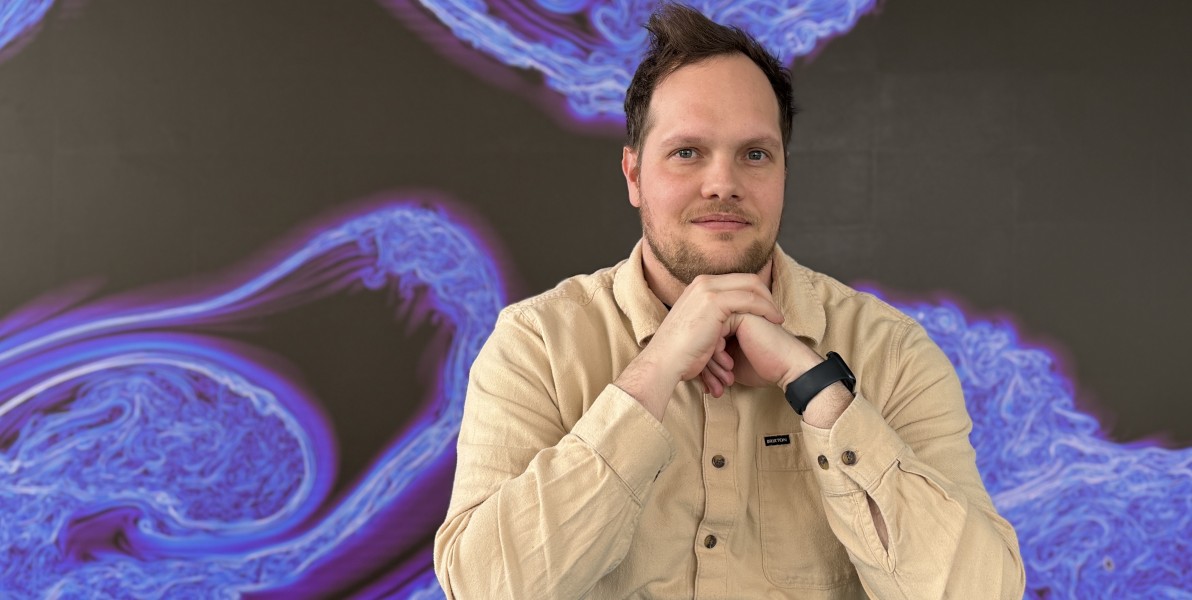
Dr. James Beattie, Postdoctoral Fellow at the Canadian Institute for Theoretical Astrophysics and Princeton University, was awarded a prestigious Hubble Fellowship, announced the Space Telescope Science Institute (STScI) on behalf of NASA today.
This fellowship will allow him to build the next generation of supercomputer models to probe how the early Universe may have become magnetized by…
Read more »